When UK SMEs Should Upgrade from DIY to Professional Website Design
Quick Summary:
UK small businesses should consider upgrading from DIY website builders to professional website development once revenue approaches six figures, conversion rates fall below 2%, or platform limitations start blocking features that directly support sales and growth.
Estimated reading time: 7 minutes
According to TechUK research from 2025, a substantial majority of UK small businesses use DIY website builders like Wix and Squarespace for their online presence. These platforms offer genuine value for startups and early-stage businesses—but there comes a point when DIY solutions become constraints rather than enablers.
The question isn’t whether DIY websites are “good enough.” It’s whether yours is actively holding back business growth. Let me explain when upgrading from DIY to professional website development makes strategic sense—and crucially, when it doesn’t.
When DIY Websites Work Perfectly Well
According to Startups.co.uk research testing 12 major website builders in 2025, modern DIY platforms offer remarkable capabilities for businesses at certain stages. Don’t upgrade unnecessarily if your current DIY website meets these criteria:
You’re validating a new business idea. Spending £5,000 on professional development before proving market demand is usually premature. DIY platforms costing £10-£50 monthly allow testing propositions quickly without massive upfront investment.
Your revenue sits below £50,000 annually. At this scale, according to business consultants, investing thousands in website development rarely delivers proportional return. Focus resources on acquiring customers and proving your business model first.
You receive adequate enquiries. If your DIY website generates sufficient leads converting into customers, it’s working. According to conversion specialists, don’t fix what isn’t broken—premature optimisation wastes money better spent elsewhere.
Your industry doesn’t require complex functionality. According to web developers, service businesses offering consultancy, coaching, or professional services need simple websites showcasing expertise and enabling contact. DIY platforms handle this perfectly well.
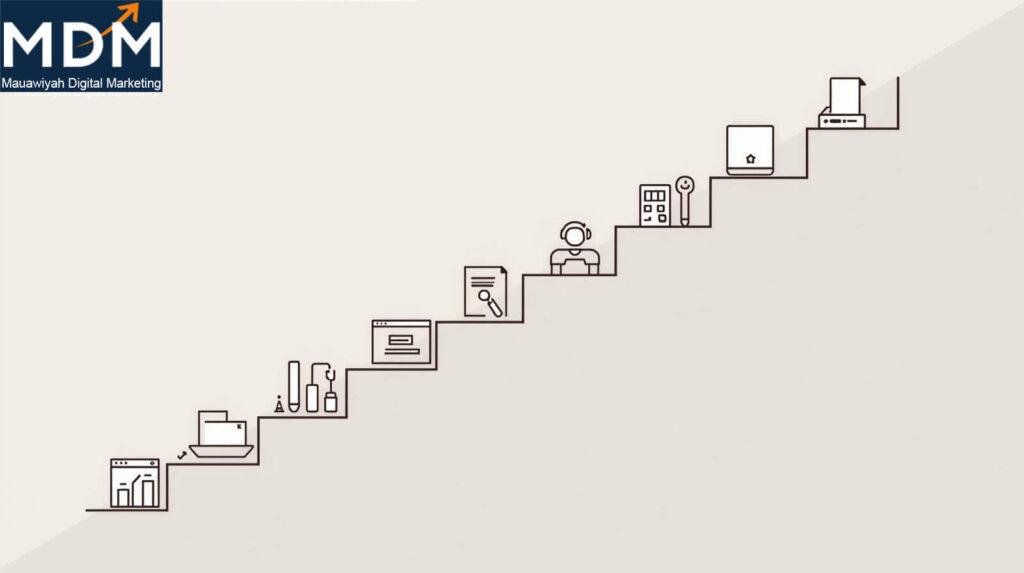
The Five Signals It’s Time to Upgrade
Certain indicators reveal when DIY limitations actively constrain growth rather than supporting it:
Signal 1: Revenue Exceeds £100,000 Annually
According to business advisers, once annual revenue crosses six figures, your website warrants professional investment proportional to business scale. At this revenue level, improving conversion rates by just 1-2% through professional optimisation delivers returns far exceeding £5,000 development costs.
Professional websites built on WordPress or custom platforms offer superior long-term value compared to accumulating years of DIY subscription fees whilst accepting platform limitations.
Signal 2: Conversion Rates Stagnate Below 2%
According to analytics providers, UK business websites typically convert 2-5% of visitors into enquiries or sales depending on industry. If your DIY website receives steady traffic but converts below 2%, design and user experience issues likely constrain performance.
Professional development addresses conversion optimisation systematically. According to UX specialists, proper information architecture, strategic placement of trust signals, optimised form designs, and mobile-specific improvements often double or triple conversion rates—directly impacting revenue.
Signal 3: You’re Spending Hours Weekly Fighting Platform Limitations
According to business owners surveyed in 2025, if you’re constantly frustrated by what your DIY platform won’t let you implement, you’re wasting valuable time that professional development would eliminate.
Common frustrations include rigid templates preventing custom layouts, inability to integrate specific third-party tools, limited design control, poor performance optimisation, and restrictive e-commerce functionality. If you’re spending 3–5 hours weekly wrestling with platform limitations, you’re losing real money in opportunity cost.
Signal 4: Mobile Performance Is Inadequate
Over 60% of UK website traffic comes from mobile devices in 2025. Whilst DIY builders claim “mobile responsiveness,” according to user experience researchers, many create poor mobile experiences with slow loading, awkward navigation, and difficult-to-complete forms.
Test your DIY website honestly on actual smartphones using mobile data. According to Google research, if loading takes longer than 3 seconds or visitors must pinch-and-zoom to read content, mobile performance is costing you customers. Professional development prioritises mobile-first design rather than treating it as automatic afterthought. For many UK service businesses, mobile users are often high-intent visitors searching during commutes or working hours, making mobile performance directly tied to enquiry quality.
Signal 5: You Need Custom Functionality DIY Platforms Can’t Deliver
According to web development specialists, DIY platforms excel at standard functionality but struggle with custom requirements. If your business needs advanced booking systems, complex product configurators, custom calculators, membership portals with specific workflows, or integration with specialist industry software, DIY limitations become insurmountable.
According to Startups.co.uk testing, Hostinger limits e-commerce to 500 products, whilst other platforms restrict email marketing capabilities or impose transaction fees. Professional development removes these artificial constraints.
The Cost Reality of Professional Development
Understanding actual costs prevents sticker shock whilst managing expectations realistically.
Initial Development Investment
According to Media Village pricing, expect these professional development costs for UK businesses in 2026:
Basic business website (5-10 pages): £3,000-£5,000 including mobile-responsive design, basic SEO setup, and professional branding integration.
Standard business website (10-20 pages): £5,000-£8,000 with custom development, stronger branding, lead generation tools, and blog functionality.
E-commerce website: £10,000+ for secure payments, shipping logic, product databases, and inventory management. Shopify and WooCommerce dominate this sector.
Landing pages: £1,500-£3,000 for focused single-page designs supporting specific campaigns or products.
According to development agencies, standard business websites typically take 4–8 weeks, whilst e-commerce projects often require 8–12 weeks. Template-based WordPress sites can be completed faster, usually within 2–4 weeks. Delays typically occur because businesses don’t provide content, photographs, or product data promptly.
Ongoing Maintenance Costs
According to web professionals, professional websites require regular maintenance unlike DIY platforms handling updates automatically. Budget £500-£2,000 annually covering hosting (£100-£400), security updates, backups, plugin updates, and minor content changes.
The Hidden DIY Costs
According to business consultants, DIY websites aren’t actually “free” despite marketing claims:
Monthly subscriptions: £10-£50 monthly (£120-£600 annually) adding up over years.
Your time investment: According to time-tracking research, DIY websites require 20-40 hours initial setup plus 2-5 hours monthly maintenance. At even modest hourly valuations, this represents £2,000-£5,000 annually in opportunity cost.
Constrained growth: Poor conversion rates often cost far more than the one-off investment in professional development. A 2% conversion rate versus 4% on a website receiving 10,000 monthly visitors means losing 200 enquiries monthly—potentially £10,000-£50,000 annual revenue depending on customer value.
Platform lock-in: According to Wix’s own terms, you own content but hosting and design lock into their platform. Switching later requires complete rebuilds.
This approach works particularly well for UK SMEs that need better SEO control, faster performance, and ownership without committing to fully bespoke development.
A Practical Framework to Upgrade a Business Website in the UK
Use this systematic approach for deciding:
Calculate your website’s current performance. Monthly visitors, conversion rate, average customer value, total revenue attributable to website enquiries. This establishes baseline.
Estimate improvement potential. According to conversion specialists, professional development typically improves conversion rates by 50-200%. If you’re currently converting 1.5% and professional development achieves 3%, that’s doubling website-driven revenue.
Calculate the return timeframe. If professional development costs £5,000 and increases monthly revenue by £500, it pays for itself within 10 months—excellent return for asset lasting 3-5 years.
Consider your growth trajectory. According to business advisers, if you’re growing rapidly and plan doubling revenue within 18 months, invest in website infrastructure supporting that scale now rather than upgrading again later.
Assess your time value. If maintaining your DIY website consumes 5 hours monthly at £50/hour opportunity cost, that’s £3,000 annually. Professional development eliminating this burden pays for itself through reclaimed time alone.
The Hybrid Approach: WordPress with Premium Themes
According to development specialists, not all professional development requires custom coding from scratch. WordPress with premium themes offers middle ground between DIY builders and bespoke development.
This approach costs £2,000-£4,000 for initial setup with designers configuring premium themes specifically for your business. You gain vastly more customisation than DIY builders, proper SEO capabilities, unlimited functionality through plugins, and none of the platform lock-in issues.
According to WordPress agencies, this approach suits businesses outgrowing DIY limitations but not yet requiring fully custom development. You can update content yourself whilst accessing professional designers for complex changes.
What Professional Development Actually Delivers
Beyond aesthetics, according to web professionals, professional development provides:
Strategic user experience design based on conversion psychology rather than template limitations.
Proper technical SEO foundation including structured data, optimised site architecture, and performance tuning—capabilities DIY platforms handle poorly.
Custom functionality matching your specific business processes rather than forcing processes around platform limitations.
Scalability supporting business growth without rebuilding. According to development firms, professional websites accommodate expanding product ranges, additional service offerings, and increased traffic without platform constraints.
Ownership and control over every aspect of your website without platform restrictions or lock-in.
The Honest Reality
DIY website builders democratised web presence for small businesses beautifully. They are not inferior tools — they are simply suited to specific stages of business growth.
The upgrade decision isn’t about DIY being “bad.” It’s about recognising when platform limitations prevent capturing revenue your business could otherwise generate. According to business strategists, if your DIY website supports current business effectively, generates adequate enquiries, and doesn’t frustrate you weekly, upgrading would waste money better invested elsewhere.
However, if you’re earning six figures annually, converting poorly despite traffic, spending hours fighting platform constraints, or requiring functionality DIY platforms can’t deliver, professional development represents strategic investment with calculable return rather than discretionary expense.
According to development agencies, the businesses upgrading most successfully do so proactively as they approach constraints rather than reactively after losing opportunities for months. They calculate expected return, budget appropriately, and approach development as strategic infrastructure supporting long-term growth.
About the Author
Dr Mauawiyah Hussan holds a Doctorate in Business Administration (DBA) and is the founder of Mauawiyah Digital Marketing. Based in Dudley, he specialises in helping small and medium-sized businesses across the West Midlands improve their online visibility and decision-making through evidence-based digital marketing strategies. With a focus on strategic insight and measurable outcomes, Dr Mauawiyah works directly with local SMEs throughout Dudley, Birmingham, Wolverhampton, the Black Country and the wider West Midlands region to develop practical, results-driven marketing solutions that support sustainable growth.
If your website needs improvement in structure, usability, or performance, Dr Mauawiyah provides website design and development services focused on clarity, speed, and conversion rather than visual trends alone.
To understand Dr Mauawiyah’s broader approach to digital marketing and how it supports sustainable business growth, visit the Mauawiyah Digital Marketing homepage, where strategy, clarity, and performance are central to every engagement.
If you would like tailored guidance based on your business goals and current challenges, you can book a free consultation to discuss practical next steps and determine whether a structured digital strategy is right for your business. Consultations are available for businesses across Dudley, Birmingham, Wolverhampton, and the wider West Midlands region.
Need clarity on how this affects your business? You can reach us on WhatsApp.
For further insights and industry updates, explore our blog