Why Social Media Engagement Is Dropping in 2026
(And How UK Businesses Can Fix It)
📌 Quick Summary:
Social media engagement is declining across UK businesses due to algorithm changes favouring paid content, content overload, and audiences demanding authenticity over promotion. In 2026, fixing this requires diversified content, genuine interaction, and accepting that organic reach alone is no longer enough.
Estimated reading time: 10 minutes
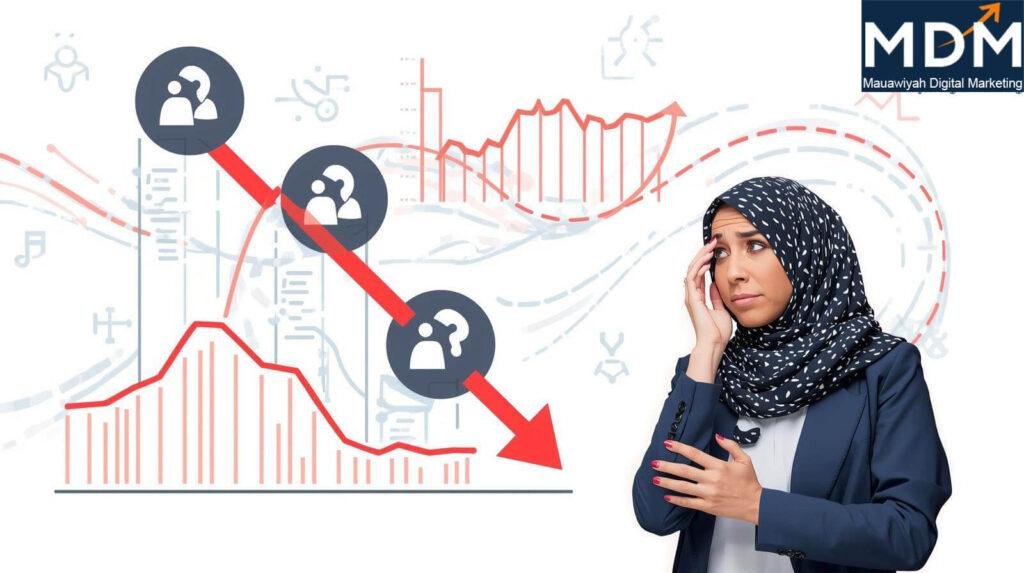
Your social media posts that reliably generated dozens of comments, shares, and engagement six months ago now barely register a handful of likes. You’re not alone, and you’re not imagining it. UK businesses across every sector are experiencing the same frustrating decline. Industry data indicates that average daily time spent on social media in the UK has declined notably in recent years.
More critically, Organic reach on Facebook business pages has declined dramatically over recent years, with industry analysis suggesting that fewer than 5% of a page’s followers typically see any given organic post — a figure that continues to fall as the platform prioritises paid content.
The reality is that the social media landscape fundamentally shifted in 2025. Strategies that worked brilliantly two years ago now generate minimal return. Platforms prioritise paid content over organic posts, audiences suffer content fatigue, and users increasingly demand authentic connection over promotional broadcasts.
Understanding why engagement is dropping—and what actually works in 2026—requires acknowledging these fundamental changes rather than continuing tactics that no longer function.
Understanding which platforms and formats are still driving real results for UK businesses — and which to deprioritise — is something we cover in detail across several related guides.
The Algorithmic Reality: Platforms Want Your Money
Every major social platform evolved algorithms dramatically in 2025, consistently prioritising paid content over organic posts. This isn’t accidental—it’s intentional business strategy as platforms monetise access to audiences you’ve built.
Organic Reach Has Collapsed
Multiple independent studies tracking Facebook organic reach have found it consistently below 5% for business pages, with some analyses recording figures closer to 2% — meaning 98 out of every 100 followers may never see a given post without paid promotion.
X (formerly Twitter) has seen significant advertiser and user departures since 2022, with engagement metrics declining year-on-year and median engagement rates on business posts remaining below 0.5% according to social media benchmark studies.
LinkedIn remains the notable exception to the organic reach collapse. Personal profile posts can still organically reach 20–40% of a user’s connections when content generates early engagement — making it the most viable platform for organic B2B reach in 2026.
Why Platforms Reduced Organic Reach
Social media companies operate primarily as advertising businesses. Facebook, Instagram, TikTok, and others generate revenue by selling access to their users through advertisements. When organic reach is high, businesses can reach audiences without paying—reducing platform revenue.
By throttling organic reach, platforms create necessity for paid promotion. You’ve built an audience of 5,000 followers? Excellent—now pay us £50-£200 to actually reach them.
UK social media advertising spend has grown year-on-year as organic reach has declined, with businesses increasingly accepting that paid amplification is the cost of maintaining visibility on platforms where they have historically built audiences for free.
The strategy is working for platforms: global social media advertising spending has reached substantial levels. Marketers wouldn’t be investing this substantially if it wasn’t delivering returns—but those returns increasingly require budget allocation.
Content Saturation and User Fatigue
Beyond algorithmic changes, users themselves have fundamentally changed their social media consumption patterns. The average UK user now encounters an overwhelming volume of content daily, creating selective filtering and reduced engagement with posts that don’t immediately capture attention. This shift has reduced tolerance for low-value or repetitive business content.
The Numbers Tell the Story
Over 53 million UK residents — more than 75% of the population — have at least one active social media account, yet despite this scale, daily time spent on social platforms has declined from its 2020–2022 peak.
This isn’t because people are abandoning social media entirely—it’s because they’re becoming more intentional about how they spend limited time on platforms. Quality over quantity has become the user-side mantra, mirroring what platforms themselves claim to prioritise algorithmically.
Research from 2025 showed that users are increasingly gravitating towards platforms offering authenticity and smaller, more intimate communities. Private groups and niche platforms prioritising genuine connections over mass engagement are growing at the expense of broadcast-style business pages.
What Users Actually Want
UK audiences in 2026 prize authenticity, relatability, and value above promotional content. A stark disconnect exists: businesses post marketing messages whilst users seek genuine connection and helpful information.
Consider these findings from recent UK research:
Research consistently shows UK social media users gravitating away from passive broadcast consumption and toward communities where they feel genuine connection. For businesses, this means corporate announcement-style posting generates increasingly poor returns, whilst content inviting dialogue, sharing real experiences, and demonstrating personality earns disproportionately high engagement relative to effort.
These patterns reveal that users want real human connection, not corporate broadcasting. The businesses succeeding on social media treat it as a conversation rather than a megaphone—exactly the opposite approach most companies take.
The Content Type Shift
What performs well on social media has fundamentally changed. Single-format strategies no longer work as platforms reward content diversity and particular formats at different times.
Instagram’s Evolution
Throughout 2024, Reels dominated Instagram engagement. By 2025, carousels overtook Reels as the highest-engaging format—yet even carousel engagement dropped notably year-over-year.
The takeaway isn’t that carousels are magic—it’s that relying on any single format guarantees declining results. Successful UK businesses now employ multi-format strategies:
Carousels: Excellent for storytelling, educational content, and value-packed posts that require multiple slides to communicate effectively.
Reels: Still powerful for reaching new audiences, particularly when using platform features like Trial Reels that allow testing content with non-followers before wider distribution.
Stories: Build community and drive interaction with existing audiences through polls, Q&As, and behind-the-scenes content.
User-Generated Content: Establishes trust and social proof. Incentivising customers to share experiences whilst tagging your business amplifies reach authentically.
The TikTok Phenomenon
UK users spend an average of over 45 hours per month on TikTok according to app usage data — significantly higher than time spent on most other social platforms. This massive engagement makes TikTok crucial for businesses targeting younger demographics.
However, TikTok success requires understanding platform-specific content culture. Polished, professional content often underperforms compared to authentic, relatable videos. Businesses succeeding on TikTok embrace informal presentation, trending sounds, and participation in platform-specific challenges rather than repurposing content created for other platforms.
For a full breakdown of how UK small businesses are using TikTok in 2026 — including setup, content strategy, and TikTok Shop — our dedicated TikTok marketing guide covers everything you need to start.
The AI Content Challenge
Most users now employ AI tools to create social media posts. However, platforms with excessive AI content—particularly when used to misrepresent or create inauthentic impressions—are driving users away.
Users don’t fear the “AI generated” label on posts, but brands should exercise caution. Audiences increasingly recognise AI-generated content and respond to authenticity. Posts obviously created by AI without human refinement or personal perspective perform poorly compared to content demonstrating genuine expertise and personality.
Fixing Your Social Media Engagement
Understanding why engagement dropped matters less than implementing strategies that actually work in 2026’s environment.
Accept Paid Amplification Is Necessary
Organic reach alone is no longer viable for businesses. Successful social media strategies in 2026 combine quality organic content with strategic paid promotion.
This doesn’t mean throwing money at every post but rather means the following:
Creating Your Best Content Organically: Develop valuable, engaging posts without initial budget allocation. See what resonates with your existing audience.
Amplifying What Works: When a post generates strong organic engagement, invest £20-£100 promoting it to expanded audiences. This extends the reach of already-proven content rather than gambling on untested posts.
Testing Strategically: Use small budgets (£10-£30) to test messages, creative approaches, and audience segments. Scale investment in approaches demonstrating returns.
Budgeting Appropriately: Plan for £200-£800 monthly minimum for meaningful social media advertising. Lower investment delivers minimal impact due to algorithm learning requirements.
The five social media mistakes most UK businesses make — including the mistake of posting without any paid support — are covered in our separate guide on social media errors costing UK businesses revenue.
Engage Like a Human, Not a Corporation
The biggest mistake UK businesses make on social media is treating it as a broadcast channel rather than a conversation platform.
Respond to Every Comment: When people take time commenting on your posts, acknowledge them. Ask follow-up questions. Have actual conversations. This signals to algorithms that your content sparks genuine interaction worth showing to more people.
Comment on Others’ Posts: Engage with complementary businesses, industry conversations, and potential customers’ content. Genuine participation in community discussions raises your visibility and builds relationships.
Use Interactive Features: Polls, Q&As, quizzes, and countdowns keep audiences engaged whilst providing valuable insights into their preferences and opinions.
Share Behind-the-Scenes Content: People connect with people, not corporate logos. Show your team, your process, your challenges. Vulnerability and authenticity build trust exponentially faster than polished promotional material.
Our guide on building an authentic social media presence without a marketing team gives UK business owners a practical framework for exactly this kind of genuine, sustainable engagement.
Create Value-First Content
Simon Sinek’s Golden Circle principle applies well to social media: audiences connect with purpose and intent, not constant promotion. Most businesses fail social media because they focus relentlessly on “what” (our products, our services, our offers) without ever communicating “why.”
Before posting, ask: “What value does this provide my audience?” If the honest answer is “it promotes my business,” that’s not value—that’s self-interest.
Value looks like the following:
- Educational content answering common customer questions
- Tips and insights demonstrating your expertise
- Industry news and commentary providing perspective
- Customer stories showcasing real outcomes
- Entertainment or inspiration aligned with your brand values
Promotional content should represent perhaps 20% of your posts maximum. The remaining 80% should provide genuine value that makes following your account worthwhile regardless of whether people ever buy from you.
Platform-Specific Strategies
Different platforms reward different approaches. Generic cross-posting identical content everywhere is recipe for failure.
Instagram: Visual storytelling through carousels, Reels showcasing personality, Stories building daily connection. Focus on aspirational yet relatable content.
LinkedIn: Thought leadership, industry insights, professional development content. Written posts often outperform external links. Focus on establishing expertise rather than promoting services.
Facebook: Community building through groups, local engagement, event promotion. Longer-form content and link sharing perform better here than Instagram. Focus on conversation and relationship-building.
TikTok: Authentic, entertaining, trend-participating content. Educational content works when delivered engagingly. Focus on personality and relatability over polish.
X (formerly Twitter): Real-time commentary, industry news, quick insights. While engagement is down, focused professional audiences remain active. Focus on timely relevance.
Don’t attempt being everywhere simultaneously. Choose 1-2 platforms where your target audience actually spends time and execute brilliantly there rather than spreading effort thinly across every platform poorly.
If short-form video feels overwhelming, our guide to short-form video marketing for UK businesses explains the content formats, posting rhythms, and platform-specific approaches that work best in 2026.
Monitor What Matters
Stop obsessing over follower counts and like numbers. These vanity metrics feel good but don’t indicate business impact.
Focus on the following metrics:
Engagement Rate: Total interactions divided by reach or followers. Rates above 2% indicate strong audience connection.
Click-Through Rate: How many people click links to your website, booking systems, or resources? This indicates genuine interest beyond passive scrolling.
Conversions: How many people take desired actions—purchases, bookings, enquiry form submissions—after engaging with social content? This reveals actual business impact.
Audience Growth Quality: Gaining 100 engaged followers genuinely interested in your content beats gaining 1,000 disengaged followers who never interact.
Share Rate: When people share your content, they’re endorsing it to their networks—the highest form of social media approval.
Use platform analytics to identify which content types, topics, and posting times generate best results for these meaningful metrics. Double down on what works rather than continuing approaches that generate impressive-sounding but meaningless statistics.
Tracking the right metrics across social media is part of a broader discipline of eliminating marketing waste — our guide to reducing marketing waste for UK SMEs covers how to audit all your channels simultaneously.
The Realistic Picture for 2026
Social media engagement in 2026 isn’t what it was in 2022 or even 2024. The landscape shifted fundamentally, and businesses clinging to outdated strategies will continue experiencing declining results regardless of effort invested.
The realities you must accept are as follows:
Organic reach is dead for commercial content. Budget for paid amplification or accept minimal visibility.
Audiences are sceptical of promotional content. Provide value first; promotion second.
Platform algorithms prioritise engagement over everything. Content sparking genuine conversation wins. Broadcast announcements lose.
Authenticity beats polish. Relatable, human content outperforms corporate-perfect posts consistently.
Consistency matters more than frequency. Three thoughtful posts weekly beat daily low-effort content.
It is also worth remembering that social media visibility complements but does not replace search visibility. While you focus on improving engagement, ensuring your business appears in Google search results for relevant queries protects you from dependence on any single platform’s algorithm.
The businesses succeeding with social media in 2026 accept these realities rather than fighting them. They invest appropriately in paid promotion, create genuinely valuable content, engage authentically with communities, and measure outcomes that actually matter for business growth.
If you’re experiencing declining engagement, you’re facing the same challenges as virtually every UK business. The difference between those succeeding and those frustrated comes down to willingness to adapt strategies to current reality rather than nostalgically pursuing tactics that worked historically but are now obsolete.
About the Author
Dr Mauawiyah Hussan is a Doctorate-qualified digital marketing consultant and founder of Mauawiyah Digital Marketing. He works with small and medium-sized businesses across the UK to improve online visibility, generate qualified leads, and build sustainable growth through structured, evidence-based digital strategies.
If your social media activity lacks direction or measurable results, explore our social media strategy services built around clear objectives and audience intent.
If you’d like help applying this to your business, you can message us on WhatsApp.