Google Business Profile:
Key 2026 Updates for UK Local Businesses
📌 Quick Summary:
Google Business Profile continues to evolve, with changes that affect how UK customers find, assess, and engage with local businesses. This article outlines the key updates for 2026 and explains what UK business owners need to review and adjust to maintain local visibility and credibility.
Estimated reading time: 10 minutes
Your Google Business Profile isn’t the same tool it was last year. In recent updates, Google has transformed its free local business platform from a simple directory listing into an AI-powered marketing hub that dramatically affects how UK customers discover and interact with local businesses.
If you rely on local customers finding you online, ignoring the 2026 GBP updates means losing business to competitors who have adapted. Google’s platform is now a powerful AI-driven marketing tool that rewards active businesses and side-lines those who neglect their profiles.
Understanding these updates and adapting your strategy accordingly can mean the difference between thriving in local search and remaining invisible whilst customers choose businesses that appear more prominently, more trustworthy, and more engaged.
AI-Generated Q&A: Google Answers Questions for You
One of the most significant recent updates is Google’s new AI-generated Q&A system. The platform now automatically creates answers in many cases to common customer questions based on your business information, reviews and web data.
When potential customers ask questions like “Do you offer emergency services?” or “Are you wheelchair accessible?” Google’s AI generates responses using information it’s gathered about your business. The encouraging news is that you can review and approve these AI-generated responses before they go live, allowing you to ensure accuracy whilst saving time answering repetitive questions.
This fundamentally changes how businesses should think about the information they publish online. Everything—your website content, review responses, service descriptions, social media—now feeds Google’s understanding of your business and influences the automatic answers it generates.
What you should do:
Regularly review the Questions & Answers section of your Google Business Profile. Check what AI-generated responses appear and edit any inaccurate information promptly.
Ensure your website, Google Business Profile description, and other online content clearly answers common customer questions. The more comprehensive and accurate information Google can access, the better its AI-generated responses will be.
Proactively add common questions and detailed answers yourself. This gives you complete control over information customers see and prevents AI from generating potentially inaccurate responses.
The shift toward AI-powered search means your GBP content is now being read and interpreted by machine learning systems as well as human visitors — how AI search is changing SEO for UK businesses explains how to structure your profile and website content so AI systems understand and recommend your business.
Popularity Now Outweighs Prominence in Rankings
Placing greater emphasis on engagement-based signals alongside traditional prominence factors.
The algorithm now evaluates how frequently users interact with your business profile: viewing your profile, reading reviews, clicking your website link, requesting directions, and calling you directly from search results. This represents a fundamental shift from rewarding established brand recognition to rewarding active engagement.
What this means practically:
The most engaged profiles rise in rankings regardless of traditional brand strength. A small, actively managed business can outrank a well-known competitor who neglects their profile.
Simply having lots of reviews isn’t enough anymore. You need recent reviews, responses to those reviews, and evidence that people find your profile helpful and worth interacting with.
Profiles with fresh photos, regular posts, updated information, and prompt responses to questions rank higher than static profiles, even if those static profiles belong to more established brands.
What you should do:
Treat your Google Business Profile as a living, active asset requiring regular attention, not a one-time setup task.
Post updates regularly. Use Google Posts to share news, offers, events, or helpful information at least weekly. These posts keep your profile active and give customers reasons to engage.
Upload new photos frequently. Profiles with regularly updated photos show customers you’re actively running your business and paying attention to your online presence.
Respond quickly to reviews and questions. Responsiveness signals that you value customer feedback and actively manage your business.
Google sees a profile with frequent clicks, calls, and interactions as more relevant and trustworthy to users, boosting its local ranking. This means every customer interaction online counts.
WhatsApp Integration for Direct Customer Communication
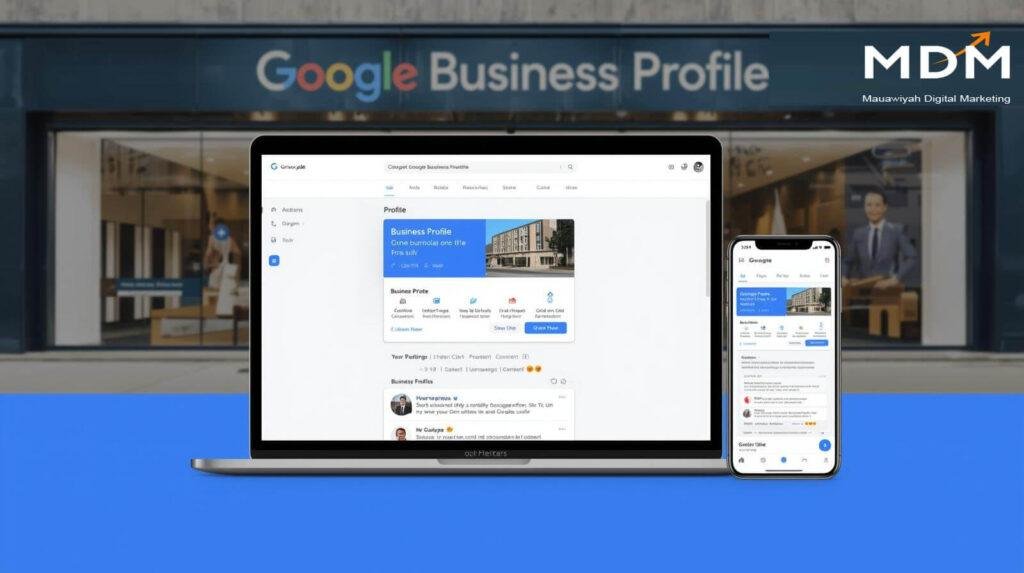
UK businesses can now connect their Google Business Profile directly to WhatsApp, allowing customers to message you in real-time without switching apps or platforms.
When someone finds your business in Google Search or Maps, they can immediately start a WhatsApp conversation with you, making communication faster and more convenient than email or traditional contact forms. This is particularly valuable for businesses where customers have quick questions or need immediate responses.
What you should do:
Head to your Google Business Profile dashboard, and navigate to the “Messages” section, and link your WhatsApp business number.
Ensure someone monitors WhatsApp messages promptly. Customers using this feature expect quick responses, and slow replies defeat the purpose of offering instant communication.
Set up WhatsApp Business features like automated greetings, away messages, and quick replies to common questions to manage customer expectations when you’re unavailable.
Google Business Profile optimisation is one component of a broader local search strategy — why every UK small business must prioritise local SEO makes the full case for why local search should be your highest-priority digital marketing investment.
Enhanced Verification Requirements
Google has tightened its verification process significantly, requiring additional verification even for businesses that were previously verified. Some businesses may receive requests for additional verification steps weeks or months after initial verification.
The company has also introduced “Video Previews” for video verification, allowing you to preview your verification video before submitting it. This helps ensure you’ve captured all necessary elements, reducing rejected verifications.
However, Google now shows a “No More Ways to Verify” message after just a few failed verification attempts, routing businesses toward support rather than allowing endless verification retries.
What you should do:
Ensure your website landing page is live with your business address clearly displayed in the footer.
Use an email address matching your domain name for verification (yourname@yourbusiness.co.uk rather than yourname@gmail.com).
Ensure your phone number is active and accepts incoming calls—numbers that go straight to voicemail may fail verification.
Make your business name exactly match what appears on your signage and logo.
Fill out your profile completely—including photos, attributes, and detailed business information—before attempting verification.
Avoid making major edits to core information (name, address, categories) within the first two weeks after verification, as this can trigger suspension.
Updated Link Policies: Local Pages Matter More
Google has updated its policy on acceptable links in business profiles. Google increasingly favours location-specific pages where applicable, particularly for multi-location businesses.
This confirms what SEO professionals have long suspected: local landing pages genuinely influence your ranking in local search results. If you have multiple locations, each must have its own dedicated page on your website.
These pages must be “functional”—users should be able to order services, contact your business, or complete other meaningful actions without requiring login credentials or solving CAPTCHA. Links to social media profiles, shortened URLs, or sites with redirects can now be removed automatically.
What you should do:
Create individual landing pages for each business location with unique content, contact information, embedded Google Maps, photos, and service descriptions specific to that location. (Our website design service can help you build conversion-ready local landing pages)
Ensure these location pages are fully functional. Test that contact forms work, phone numbers connect properly, and users can complete desired actions without barriers.
Avoid using shorten URL, redirects, or links that require authentication to view location information.
New “What’s Happening” Feature for Events
Google launched a feature called “What’s Happening” specifically for bars and restaurants, allowing businesses to promote events, daily specials, and live entertainment directly in their Google listings.
These updates can be posted directly through Google Business Profile or synced automatically from Facebook, Instagram, or X (formerly Twitter) profiles. The feature is currently available for single-location food and drink businesses in the UK, US, Australia, Canada, and New Zealand.
What you should do (if eligible):
Regularly update your “What’s Happening” section with timely information like “Today’s Special,” “Live Music Tonight,” or “Happy Hour Now.”
Connect your social media accounts to sync events automatically if you’re already posting this information elsewhere. Use this feature strategically to drive foot traffic during slower periods by promoting limited-time offers or special events.
What Changed in GBP Reporting — and Why It Matters
From mid-2025 onwards, many businesses noticed changes in how Google reports profile statistics. The system now focuses primarily on top queries, while low-volume keywords (between 11-100 impressions) have disappeared from reports entirely.
This simplifies reporting but makes it less useful for understanding the full range of searches bringing customers to your business, particularly affecting smaller local businesses who previously tracked these lower-volume but highly relevant search terms.
What you should do:
Rely more heavily on your own metrics: track phone calls, map clicks, and website visits using UTM parameters to understand traffic sources.
Set up Google Analytics tracking for visits arriving from your Google Business Profile to supplement Google’s official reporting.
Manually document trends in customer enquiries, noting which services generate the most interest even if Google’s reporting doesn’t capture the specific queries driving that interest.
QR Codes for Easy Review Generation
Google introduced QR codes that businesses can download and display physically, allowing customers to leave reviews instantly by scanning the code with their smartphones.
These codes link directly to your business’s review page, eliminating the friction of customers needing to search for your business, navigate to the reviews section, and then write feedback.
What you should do:
Download your unique QR code from the reviews section of your Google Business Profile.
Display the code prominently at your business location—at checkout counters, on receipts, on table tents in restaurants, or on service completion paperwork.
Include the QR code in follow-up emails or text messages where appropriate thanking customers for their business, making it effortless for satisfied customers to share positive experiences.
Google Verified Badge Replaces Other Trust Signals
Google launched “Google Verified,” consolidating various Local Ads trust signals into a simplified badge structure.
Eligible businesses that pass verification now display the Google Verified badge, which dynamically appears to help customers make informed decisions about which businesses to trust. This simplifies the trust signalling process whilst maintaining rigorous verification standards.
What you should do:
If you’re eligible for Google Local Services Ads, complete the verification process to earn the Google Verified badge.
Display the badge prominently as a trust signal to differentiate your business from unverified competitors.
The Bottom Line
Google Business Profile has evolved from a basic online directory into a sophisticated, AI-powered marketing platform that directly influences whether customers find and choose your business. The 2026 updates reward businesses that stay active, maintain accurate information, engage regularly with customers, and treat their profiles as central to their marketing strategy.
Businesses ignoring these updates will find themselves increasingly invisible in local search results as Google’s algorithm prioritises profiles demonstrating genuine popularity and active engagement over static listings from established brands.
Review your Google Business Profile today. When did you last update it? Have you responded to recent reviews? Have you posted updates in the past week? If the answer to any of these questions is “no” or “I’m not sure,” you’re likely falling behind competitors who’ve adapted to Google’s new priorities.
Local search visibility isn’t optional in 2026—it’s fundamental to customer acquisition for UK small businesses. Optimising your Google Business Profile according to these new guidelines represents one of the highest-return investments you can make in your business’s online presence.
If your business is still not appearing prominently in local search despite having a GBP profile, the issue often lies elsewhere — why your UK business isn’t showing up on Google identifies the five most common causes and their practical fixes.
About the Author
Dr Mauawiyah Hussan is a Doctorate-qualified digital marketing consultant and founder of Mauawiyah Digital Marketing. He works with small and medium-sized businesses across the UK to improve online visibility, generate qualified leads, and build sustainable growth through structured, evidence-based digital strategies.
Mauawiyah Digital Marketing offers structured local SEO and Google Business Profile optimisation designed around UK search behaviour and compliance with Google’s latest guidelines.
If you’re looking for clear, practical direction on how digital marketing can support your business, you can request a free consultation to discuss your goals and next steps.
If you’d like help applying this to your business, you can message us on WhatsApp.